
Retaining structures and lining of deep excavations
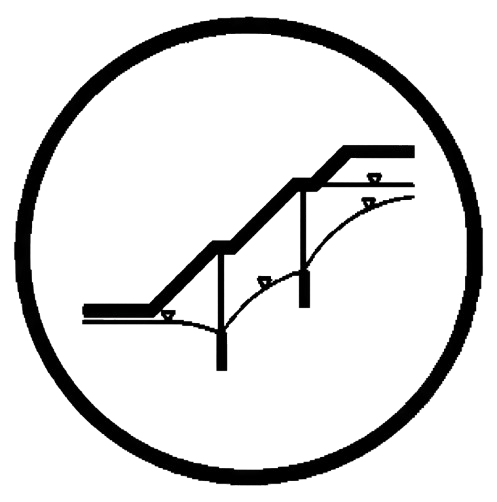
We design retaining structures and deep excavation supports in complex soil and water conditions, including in landslide-prone areas (Carpathian flysch). We base our solution selection on numerical analyses (PLAXIS 2D/3D/Flow) and classical methods, which minimize ground movement, ensure stability, and safely stage the work.
Technologies we use:
- Reinforced concrete retaining walls: massive, cantilevered, anchored.
- Prefabricated elements – system retaining walls with foundations adapted to the ground conditions.
- Reinforced soil with facing
- Combined systems: e.g. pile wall + reinforced soil to reduce displacements and costs.
- Berlin wall (cantilever, single and multiple anchors).
- Steel profile casings: cantilevered, anchored, with steel struts.
- Ground nailing with shotcrete facing.
Analysis and design
Stability of walls and slopes, soil and water pressure, influence of filtration (PLAXIS 2D/3D/Flow, GEO5, GGU-Stability).
Forecasting displacements over time – rheological models and work staging.
Foundations and foundations of walls/retaining walls (slabs, footings, piles, DSM).
Variation and optimization (value engineering) in line with budget and schedule.
Staging and implementation conditions
Schedule of the temporary and final phases (anchors/struts, spacers, reforming).
Coordination with drainage and security of adjacent facilities.
Assembly guidelines, STWiORB and quality control plan.
Monitoring and security
Inclinometers, geodetic benchmarks, strut/anchor measurements, water level monitoring.
Alarm criteria and procedures for responding to deviations.
Periodic reports for supervisory and investor purposes.